How to Protect Passenger Privacy on Every Trip
November 27, 2026 · 6 min read · PV Black Car
Learn how to protect passenger privacy with discreet chauffeurs, secure booking, private vehicles, and thoughtful travel practices for every journey.
Privacy is not an amenity reserved for celebrities or executives. It is the ability to make calls, review sensitive material, travel with family, and arrive without becoming part of someone else’s conversation. Knowing how to protect passenger privacy begins well before the vehicle reaches the curb. It is shaped by the transportation provider, the booking process, the chauffeur’s judgment, and the choices made throughout the journey.
For discerning travelers in Scottsdale, Paradise Valley, Phoenix, and across the Valley, privacy is often inseparable from time, safety, and peace of mind. A properly managed ride creates a quiet perimeter around the passenger - one that allows the schedule to proceed without unnecessary exposure.
How to Protect Passenger Privacy Before You Travel
The privacy standard of a trip is usually established at reservation. A reputable private chauffeur service should collect only the information required to execute the itinerary well: pickup details, passenger count, luggage needs, flight information when relevant, and a secure method of payment. The process should feel precise rather than intrusive.
Be thoughtful about where travel details are shared. Group texts, open calendar invites, and broad email chains can expose an itinerary to people who do not need to see it. For sensitive movements, designate one point of contact and communicate changes directly through the transportation provider’s approved channel. This limits confusion and reduces the chance that a pickup location, private terminal arrival, or hotel departure time is circulated unnecessarily.
It also helps to choose a provider that treats booking records as confidential operational information, not marketing inventory. Ask how passenger data is stored, who can access it, and whether billing can be handled digitally and discreetly. Corporate travelers may also want a provider prepared to work within internal travel policies or execute a confidentiality agreement when the engagement calls for it.
Privacy is not simply about keeping a name off a manifest. It is about controlling who knows the plan, when they know it, and what they can do with that information.
Choose a Vehicle That Creates a Private Environment
The right vehicle can materially change the experience. A premium SUV offers a composed, personal setting for one to three passengers, while an executive van gives families, teams, and assistants room to travel together without splitting into multiple cars. Fewer vehicles means fewer drivers, fewer stops, and fewer opportunities for an itinerary to be discussed or miscommunicated.
Vehicle condition matters as well. Tinted windows, a clean cabin, quiet ride quality, and adequate luggage capacity are not merely matters of luxury. They allow passengers to enter, settle in, and conduct themselves with less visibility and disruption. In a well-appointed Cadillac Escalade or Mercedes Sprinter, a confidential call does not need to wait until the next destination.
Still, window tint alone is not a privacy plan. Local regulations determine what is permitted, and no vehicle can eliminate visibility at busy hotel entrances, event venues, airports, or private aviation facilities. The more reliable strategy combines an appropriate vehicle with careful curbside timing, a chauffeur who understands the property, and a clear arrival plan.
Consider the pickup and drop-off environment
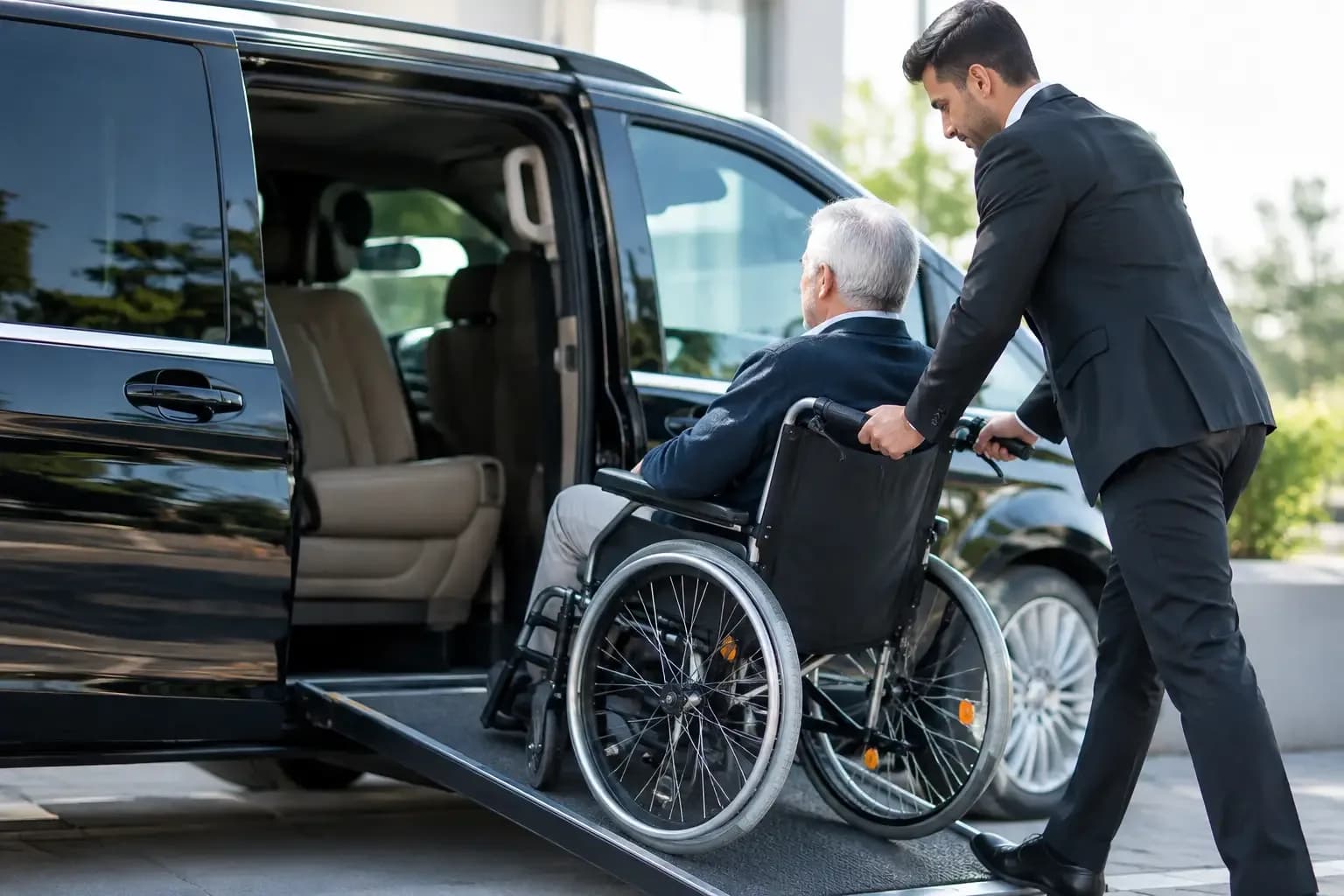
A private residence, resort porte cochere, corporate headquarters, and aviation terminal each call for a different approach. At some locations, a chauffeur can stage nearby until the passenger is ready, avoiding a conspicuous wait at the entrance. At others, the best option may be a prearranged side entrance, a discreet meeting point, or direct coordination with security.
The goal is not to create unnecessary ceremony. It is to avoid the common friction points that attract attention: searching for a vehicle, standing outside with luggage, taking multiple calls to locate a driver, or discovering that the vehicle cannot access the preferred entrance.
The Chauffeur Is the Most Important Privacy Protocol
A sophisticated vehicle makes an impression. A disciplined chauffeur protects the trip.
Professional discretion should be evident from the first interaction. The chauffeur confirms identity without announcing names across a lobby, handles luggage without inspecting personal items, and keeps conversation appropriate to the passenger’s lead. They do not ask for photos, discuss prior clients, share sightings, or make assumptions about the reason for travel.
This restraint is especially valuable when passengers are public-facing, traveling with children, managing a sensitive business matter, or simply seeking a quiet evening. A chauffeur should understand that silence can be service. The cabin is not a networking opportunity, and a passenger’s private conversation is never a source of entertainment.
Experienced chauffeurs also avoid unnecessary route commentary and do not disclose destinations, hotel details, or passenger information to third parties. If a venue, assistant, security professional, or family member needs an update, the chauffeur should communicate only through the approved contact and only as needed to complete the service.
At PV Black Car, discretion is treated as an operating standard, not a special request. That means professionally trained chauffeurs, customized itineraries, and measured communication designed around the passenger’s preferences.
Set expectations without making the trip complicated
Travelers should feel comfortable stating a few preferences at booking: whether the chauffeur should call or text on arrival, whether a name sign is appropriate, who may authorize changes, and whether the ride requires a particularly quiet cabin. These details are easy to accommodate when they are shared in advance.
For executive teams, it is wise to clarify whether assistants may adjust the itinerary and whether passengers should be contacted directly. For families, specify car seats, luggage requirements, and any need to minimize stops. For private jet transfers, confirm the preferred handoff procedure with the flight department or fixed-base operator. Clear instructions protect privacy because they reduce improvisation.
Protect Privacy Inside the Vehicle
A luxury cabin often becomes a working space between appointments. That makes ordinary digital habits more consequential. Use headphones for sensitive calls when possible, avoid discussing credentials aloud, and lock screens before stepping out for a quick stop. If documents must be reviewed in transit, keep them secured when leaving the vehicle, even briefly.
Wi-Fi is valuable for productivity, but confidential work deserves the same care it would receive in a hotel lounge or airport terminal. Use a trusted virtual private network when company policy requires it, avoid conducting financial transactions on unfamiliar public connections, and do not leave devices connected after the trip. The convenience of connectivity should not override sensible information security.
Passengers should also decide how much location sharing is necessary. Many phone applications automatically broadcast a person’s movements to family groups, colleagues, social platforms, or connected devices. That may be appropriate for some travelers and unacceptable for others. Review these settings before a high-profile event, business meeting, or private residence transfer.
A skilled chauffeur contributes by maintaining the cabin as a calm, professional environment. Bottled water, charging access, climate control, and a clean interior help passengers stay comfortable without creating interruptions that pull attention away from private work or conversation.
Build Privacy Into Complex Itineraries
The more moving parts a day contains, the more valuable a single accountable transportation partner becomes. A schedule involving airport arrivals, office meetings, resort appointments, golf clubs, dinner reservations, and event departures can easily expose details when each segment is assigned separately.
Hourly chauffeur service gives the passenger greater control in these situations. The vehicle remains available, the chauffeur understands the broader schedule, and changes can be handled without repeatedly sharing the next destination with a new driver. This is particularly useful for executives with shifting calendars, families attending multiple events, and guests who prefer not to wait in public pickup zones.
There is a trade-off: dedicated service may cost more than a sequence of individual trips. Yet for travelers whose time, confidentiality, or comfort carries real value, the additional control is often the point. Privacy is rarely achieved by choosing the cheapest option. It is achieved by reducing handoffs, uncertainty, and unnecessary access to personal information.
Know What a Transportation Provider Should Never Do
Discretion becomes easier to evaluate when the boundaries are clear. A provider should never post passenger images, vehicle locations, or identifiable itinerary details without explicit permission. Chauffeurs should not discuss clients with other passengers or use a recognizable passenger’s trip as a sales story. Personal information should not be casually shared with venues, affiliates, or anyone outside the operational need to know.
Be cautious when a company makes vague promises about VIP treatment but cannot explain its actual practices. Ask direct questions about chauffeur training, communication procedures, data handling, and who receives flight or itinerary updates. The answer should be confident and specific, not evasive.
The best private transportation feels effortless precisely because the planning is disciplined. You should not have to manage every detail from the back seat or wonder who has access to your schedule.
Privacy is ultimately a form of personal control. When the reservation is handled securely, the vehicle is selected thoughtfully, and the chauffeur works with quiet precision, travel becomes what it should be: time that belongs entirely to you.