Can Chauffeurs Accommodate Wheelchairs? Yes.
November 13, 2026 · 5 min read · PV Black Car
Can chauffeurs accommodate wheelchairs? Learn what to request for safe, discreet accessible travel, from vehicle access and storage to tailored assistance.
A wheelchair should never turn a carefully planned arrival into an improvised transfer. So, can chauffeurs accommodate wheelchairs? Yes, often very effectively - provided the transportation is reserved with the right vehicle, equipment, and level of assistance in mind. The distinction matters: premium transportation is not one-size-fits-all, and a thoughtful advance conversation is what turns a ride into a properly managed experience.
For discerning travelers, accessible chauffeur service is about more than fitting a chair into a vehicle. It is about preserving comfort, dignity, timing, privacy, and personal control from pickup through arrival.
Can Chauffeurs Accommodate Wheelchairs Safely?
A professional chauffeur can assist a wheelchair user in several ways, but the exact accommodation depends on whether the guest transfers into a vehicle seat, remains in the wheelchair during travel, uses a folding chair, or travels with a powered mobility device. Those are materially different arrangements, requiring different vehicles and preparations.
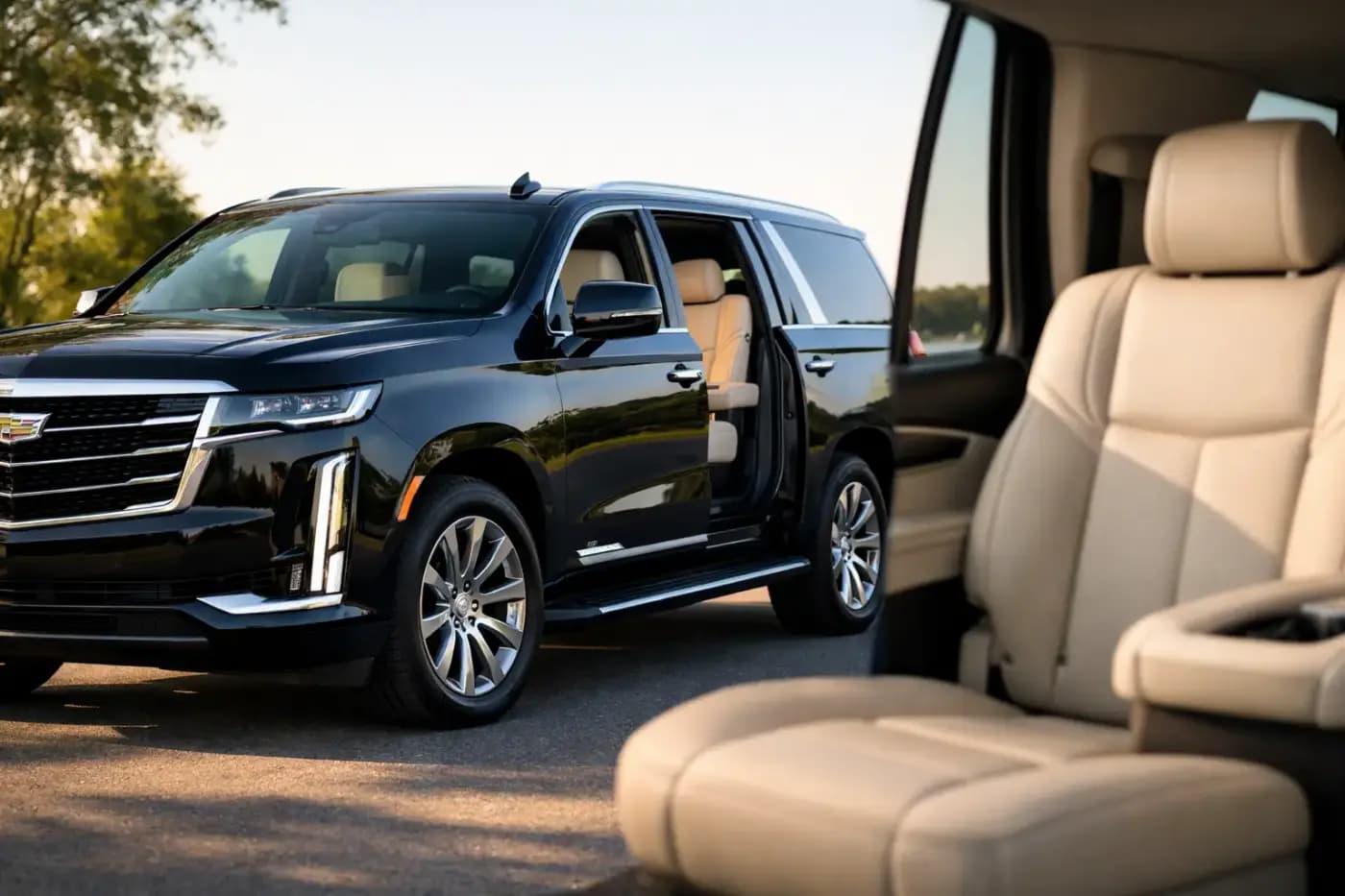
When a guest can transfer into a seat, a luxury SUV or executive van may be suitable if the wheelchair folds and can be secured in the cargo area. A chauffeur can provide measured assistance at the door, allow ample time for boarding, and keep the chair protected during the journey. For many airport transfers, resort departures, dinners, and medical appointments, this is the most comfortable and elegant option.
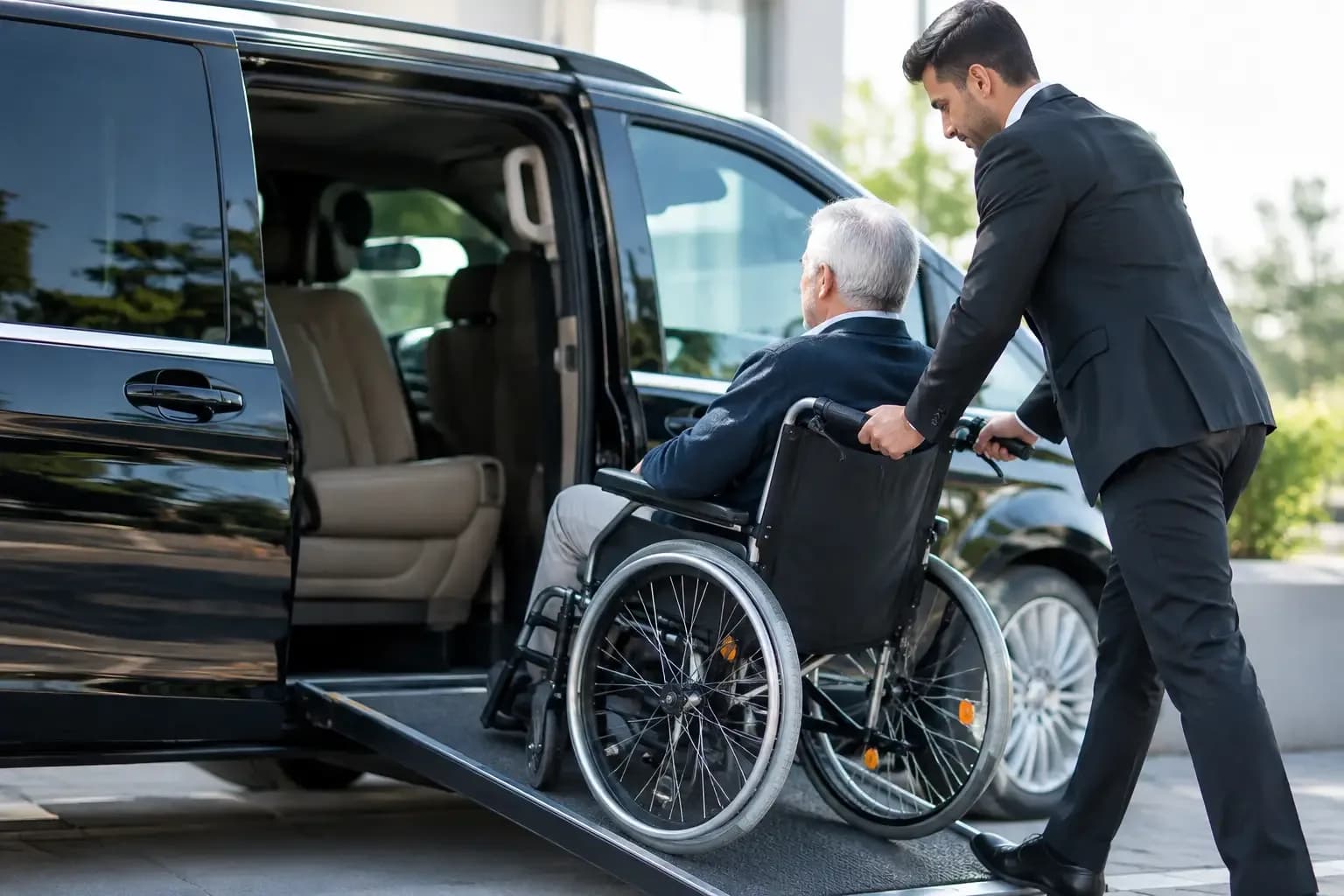
When a guest must remain seated in their wheelchair while the vehicle is moving, the vehicle must be specifically equipped for wheelchair transportation. That typically means a ramp or lift, sufficient interior clearance, approved wheelchair tie-downs, and an occupant restraint system. A standard luxury vehicle, even one with generous space, should never be assumed to meet this need simply because it can carry a wheelchair.
Safety is not an upgrade or a courtesy. Proper securement, adequate door clearance, and a chauffeur trained for the planned boarding process are essential. The right provider will be candid about what its assigned vehicle can and cannot accommodate.
The Details That Shape the Right Vehicle
The most successful reservations begin with a few practical details shared in advance. This is not unnecessary formality. It allows the transportation team to assign the appropriate vehicle, plan the pickup position, and make the arrival feel composed rather than rushed.
Start with the wheelchair itself. A manual folding chair is usually easier to place in an SUV or van than a rigid-frame, powered, or bariatric model. The dimensions, weight, battery type, and whether the chair can fold all influence vehicle selection. If the chair is motorized, ask whether it can be safely loaded, stored upright, and protected throughout the trip.
Next, clarify whether the traveler can transfer independently, travels with a companion who assists, or requires the chauffeur to provide limited non-medical assistance. Chauffeurs are transportation professionals, not medical caregivers. They may be able to offer an arm for balance, manage doors and luggage, or coordinate a slower boarding process, but they should not be asked to perform lifting, clinical transfers, or any action beyond their training and safe operating procedures.
Finally, consider the complete itinerary. A curbside hotel entrance, private aviation terminal, residence with a steep drive, golf club, restaurant, or event venue may present different access conditions. An experienced local transportation team will account for the practical details: the most appropriate entrance, the smoothest route, the time needed to board, and whether the destination has a convenient drop-off area.
What to Request When Booking Accessible Chauffeur Service
Clear communication protects both comfort and punctuality. Rather than simply requesting “a vehicle for a wheelchair,” describe the travel arrangement. Explain whether the wheelchair will be stored or occupied in transit, whether the guest can transfer, and whether a companion is traveling.
It is also wise to request confirmation of the vehicle configuration before the day of service. Ask whether the assigned vehicle has the necessary access equipment if the guest remains in the chair, how the wheelchair will be secured, and whether the chauffeur has been briefed on the booking notes. For a folding wheelchair, confirm that there is space for the chair alongside luggage, golf clubs, mobility aids, or other personal items.
A concise booking note can prevent most avoidable complications: “Guest travels with a folding manual wheelchair, can transfer with minimal assistance, and has two checked bags” is far more useful than “wheelchair passenger.” If the wheelchair is powered, provide its approximate weight and dimensions. If a lift-equipped vehicle is required, state that directly.
For airport travel, build in additional time. Flight monitoring and carefully timed curbside pickup remain valuable, but wheelchair loading and boarding should not be squeezed into an overly tight schedule. A few extra minutes provide the margin needed for an unhurried, dignified departure.
Luxury Does Not Mean Guesswork
There is a common assumption that a larger premium vehicle automatically provides accessible transportation. It may provide additional room, but room alone is not the same as accessibility. A Cadillac Escalade can be an excellent choice for a guest who transfers and brings a folding wheelchair. A Mercedes Sprinter may offer more capacity for family members, luggage, or a mobility device. Neither should be represented as a wheelchair-in-vehicle solution unless it has the required accessibility conversion and securement equipment.
That distinction is especially relevant for executives, families, and private travelers who value discretion. The right experience is quiet and prepared: the vehicle arrives positioned appropriately, the chauffeur understands the plan, doors and belongings are managed with care, and the guest is never left to explain personal needs repeatedly at the curb.
At PV Black Car, the concierge standard begins with listening to the specifics of the journey. Where a requested accommodation requires a particular vehicle capability, the proper response is clear coordination and honest confirmation - not an assumption made at the time of pickup.
Questions Worth Asking Before You Confirm
Can the guest stay in the wheelchair during the ride?
Only if the assigned vehicle is designed and equipped for occupied wheelchair transport. Ask specifically about ramp or lift access, wheelchair securement, and passenger restraints. If those features are not confirmed, plan for a transfer into a passenger seat instead.
Can a chauffeur lift a passenger into the vehicle?
A chauffeur may provide limited, non-medical assistance consistent with company policy and training, but lifting a passenger is generally not an appropriate expectation. If hands-on transfer support is needed, travel with a qualified companion or arrange specialized assistance.
Will the wheelchair fit with luggage?
It depends on the chair and vehicle. Folding manual chairs often fit comfortably with ordinary luggage in larger luxury vehicles. Powered chairs, multiple large bags, and group travel may call for a more spacious configuration or a separate luggage plan.
How far ahead should accessible transportation be reserved?
Advance reservations are strongly preferred, particularly when a lift-equipped vehicle, a specific seating arrangement, or a detailed itinerary is required. Earlier notice gives the provider time to confirm capability rather than offer a vague assurance.
A Better Standard of Care at the Curb
Accessible chauffeur service is most successful when it is treated as a personalized travel plan, not a last-minute vehicle request. The trade-off is simple: a little more detail before the reservation earns a far more comfortable experience on the day itself.
Share the wheelchair specifications, the transfer needs, the passenger count, and the rhythm of the itinerary. Then expect a direct answer about what can be accommodated. That level of preparation preserves what private transportation should always provide: a calm, discreet arrival with every practical detail already considered.