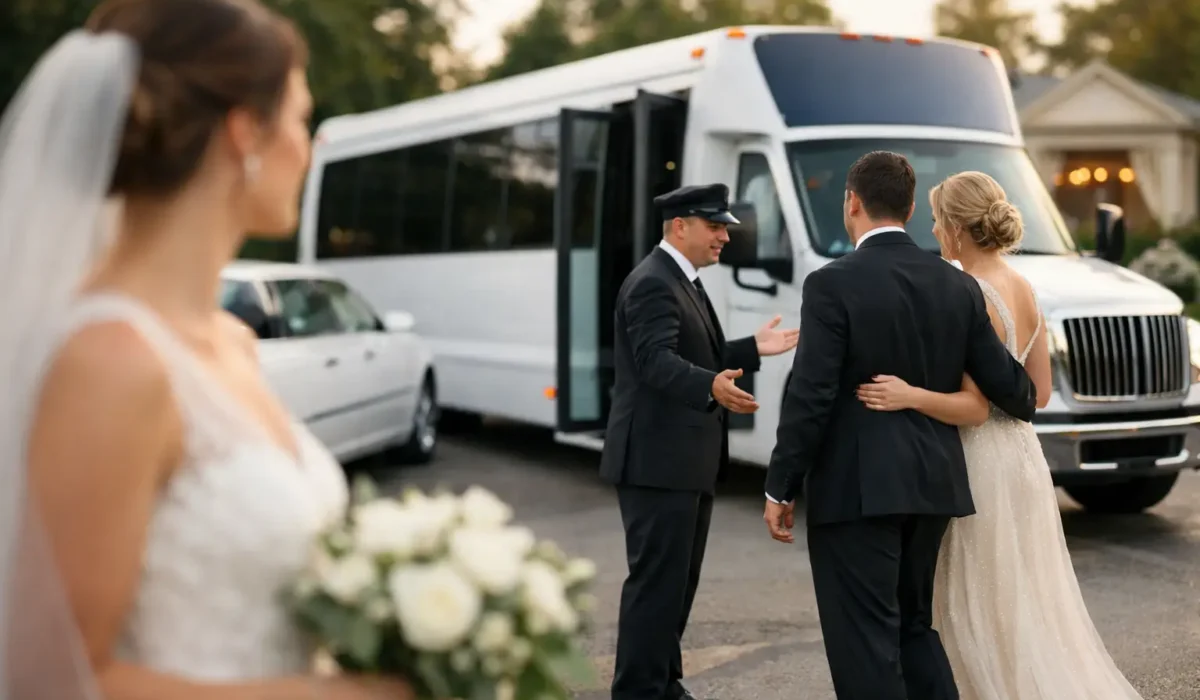
A wedding can lose its sense of occasion in a parking lot. Guests arrive late, family members field calls about directions, and the couple’s carefully planned timeline begins to bend around traffic. Thoughtful wedding shuttle coordination prevents that drift. It gives every guest a clear, comfortable route through the day while preserving the calm, privacy, and polish the celebration deserves.
For weddings in Scottsdale, Paradise Valley, and across the Valley, transportation is rarely a simple trip from one address to another. Ceremony venues, resorts, reception spaces, rehearsal dinners, after-parties, and private residences may all sit on different schedules. The right plan treats transportation as part of the guest experience, not an afterthought assigned to the final week.
Wedding Shuttle Coordination Begins With the Guest Journey
The best transportation plan starts by tracing the day as a guest will experience it. Where are they staying? When do they need to be seated? Will they leave the reception at the same time, or in waves? Those details determine whether one vehicle, a rotation of vehicles, or dedicated departure windows will serve the event best.
A Mercedes Sprinter can be an elegant choice for wedding parties and groups who want generous space without sacrificing a refined atmosphere. For immediate family, senior guests, or principals who require more privacy, a Cadillac Escalade offers a quieter, more personal arrival. Using both vehicle types can create a tailored hierarchy: group transportation for shared movements and private chauffeur service for the people whose timing must remain especially protected.
This is not about adding vehicles for the sake of scale. It is about matching capacity to the real guest count and the rhythm of the event. A transport plan built around assumptions can leave empty seats in one direction and an unexpected wait in the other. A plan built around confirmed lodging, attendance patterns, and venue access creates a much more composed experience.
Build the Schedule Around Fixed Moments
A wedding timeline has a few moments that cannot move: ceremony start, photographer access, the couple’s entrance, dinner service, and venue curfews. Transportation should be designed backward from those points, with enough margin for loading, traffic, and the occasional guest who is not quite ready when the lobby call is made.
For an arrival shuttle, a practical goal is to have guests at the venue well before the stated ceremony time. That does not mean everyone must arrive excessively early. It means the final scheduled vehicle should allow enough time for guests to find their seats without entering during the processional. At properties with larger grounds or controlled access, the time between driveway arrival and ceremony seating should be accounted for as well.
Return service needs equal attention. Some guests may wish to leave immediately after dinner, while others will remain through the final dance. Rather than one vague promise of transportation at the end of the night, establish clear departure windows. A first departure supports older relatives and families. A middle departure accommodates guests ready to retire. A final departure closes the evening for those staying through the celebration.
The couple should also have a protected plan. Their vehicle should not be pulled into general guest rotation, and their departure should not depend on whether another group is ready to leave. A dedicated chauffeur allows them to exit on their own timetable, with room for a change of clothes, personal items, and a quiet moment before the next part of the evening.
Give Each Location a Realistic Transfer Time
Mapping apps can offer a useful baseline, but wedding transportation requires more judgment than a standard point-to-point estimate. Valley traffic varies sharply by day, time, and event activity. Resort driveways may be busy. Private venues can have narrow approaches, controlled gates, or limited areas for vehicle staging.
An experienced local chauffeur team considers the route as well as the destination. The preferred route may not be the shortest route if it exposes guests to congestion, complicated turns, or a difficult loading area. It may also be wise to plan a discreet alternate route for the wedding party or principals, especially when privacy and a timely arrival matter most.
Details That Make Wedding Shuttle Coordination Feel Effortless
The outward experience should feel simple to guests, even when the logistics behind it are exacting. They should know where to wait, what time to be there, and what vehicle to look for. They should not need to exchange multiple calls with a driver or wonder whether the departure has changed.
A complete transportation brief should confirm the essentials in one place:
- Pickup addresses and exact loading locations
- Scheduled departure windows and final pickup times
- Guest counts, mobility considerations, and luggage needs
- Venue contact information and approved staging instructions
- A designated planner, family representative, or coordinator for day-of decisions
This information should be finalized early enough for the chauffeur team to review routes, timing, and access requirements. It also gives the wedding planner a single source of truth when communicating with hotels, venues, and vendors.
Communication needs restraint. Guests do not need the entire operating plan. A concise transportation card in the wedding itinerary, a message from the planner, or a well-timed reminder is usually enough. The wording should be direct: where to meet, when the vehicle departs, and whether reservations or assigned groups apply. Clarity is a form of hospitality.
Consider the Guests Who Need More Than a Group Departure
Group transportation is efficient, but not every guest should be asked to follow the same schedule. Grandparents may prefer a quieter, earlier return. A parent managing young children may need flexibility. A VIP guest, executive, or public-facing family member may require a private arrival that does not draw attention.
This is where a concierge approach makes a visible difference without becoming visible itself. Private vehicle movements can be arranged around the core shuttle schedule, allowing certain guests to move discreetly while the broader group remains well served. The result is an event that feels inclusive rather than rigid.
The same consideration applies to the wedding party. Hair, makeup, photography, and pre-ceremony preparations often unfold at a different pace than guest transportation. Their vehicle plan should reflect that reality, with room for garment bags, personal effects, and reasonable flexibility. A large group vehicle may be ideal for a coordinated party transfer, while separate private transportation better suits the couple and key family members.
Protect the Experience With Professional Oversight
The difference between a vehicle reservation and true wedding transportation service is anticipation. Chauffeurs should arrive prepared, know the venue protocol, understand who has authority to make changes, and remain attentive without intruding on the celebration.
Professional presentation matters, but discretion matters more. At a wedding, the chauffeur is there to create confidence, not to become part of the occasion. Guests should encounter a courteous professional, a pristine vehicle, bottled water, and a composed cabin. The couple and planner should encounter accurate timing, calm updates when necessary, and someone who can adapt to a change without making it everyone else’s problem.
For a multi-event weekend, centralizing service with one transportation partner can also reduce confusion. Rehearsal dinner transfers, airport arrivals for family, ceremony shuttles, and the couple’s final departure can be planned with a single operating view. PV Black Car approaches these movements as connected parts of a private itinerary, with professionally trained chauffeurs, locally informed routing, and the discretion discerning families expect.
Reserve Earlier Than You Think You Need To
High-demand wedding dates, major sporting weekends, holiday periods, and peak spring travel can affect vehicle availability throughout the Valley. Early planning provides more choice in vehicle configuration and makes it easier to accommodate separate guest groups or private movements. It also gives everyone time to identify practical concerns, such as accessibility, venue restrictions, and late-night return schedules.
That said, not every detail must be fixed months in advance. It is normal for guest counts and hotel room blocks to shift. The key is to reserve the appropriate service structure early, then refine the manifest and timing as RSVP information becomes reliable. A good plan has enough structure to protect the day and enough flexibility to absorb small changes.
A wedding transportation plan succeeds when guests remember the warmth of the celebration, not the route they took to reach it. Give them a gracious arrival, an easy return, and the confidence that every movement has already been considered.




How to Coordinate Confidential Executive Travel
Learn how to coordinate confidential executive travel with discreet planning, secure details, flight tracking, private…

Event Transport That Protects the Occasion
Event transport for Scottsdale gatherings: private chauffeurs, tailored itineraries, discreet arrivals, and dependable timing for…

Corporate Chauffeur Guide for Executive Travel
A corporate chauffeur guide for executives who expect privacy, punctuality, and polished ground transportation for…

Private Aviation Ground Options That Work
Private aviation ground options should protect your time, privacy, and comfort from tarmac arrival through…

Scottsdale Corporate Retreat Transportation Guide
Scottsdale corporate retreat transportation guide for executive arrivals, confidential travel, group movements, and precise Arizona…

Airport Chauffeur Service for Travel Without Friction
Choose an airport chauffeur for punctual, private travel from Phoenix Sky Harbor or Scottsdale Airport,…

Executive Roadshow Transport Example in Phoenix
See an executive roadshow transport example built for Phoenix leaders, with precise routing, discreet chauffeurs,…

Mercedes Sprinter Capacity Review for Executive Travel
Our Mercedes Sprinter capacity review explains seating, luggage room, and the details that shape a…
Wedding Shuttle Coordination for Refined Events
Wedding shuttle coordination brings every guest from ceremony to celebration with privacy, precise timing, and…

Sprinter Versus Escalade for Executive Travel
Compare Sprinter versus Escalade service for executive travel, airport transfers, and events, with the privacy,…