
A productive executive roadshow is rarely won in the boardroom alone. It is protected in the spaces between meetings: when a principal leaves the aircraft, reviews notes in privacy, arrives composed, and never has to ask where the car is. This executive roadshow transport example shows how a carefully managed day can preserve time, discretion, and control across the Phoenix-Scottsdale corridor.
For a CEO, investor, or deal team, ground transportation is not a series of rides. It is a moving operational environment. The vehicle must be in position before the itinerary begins, the chauffeur must understand the order of calls without requiring repeated direction, and the schedule must have enough flexibility to absorb the realities of executive travel.
An Executive Roadshow Transport Example, Hour by Hour
Consider a visiting executive and two colleagues arriving for a one-day series of meetings. Their aircraft is scheduled into Scottsdale Airport at 8:15 a.m. They have a breakfast discussion in Paradise Valley, a late-morning presentation in downtown Phoenix, a working lunch near Biltmore, a private meeting in Scottsdale, and an evening flight departure from Phoenix Sky Harbor.
The itinerary looks straightforward when viewed as addresses and appointment times. It is not. Each transfer carries a different requirement: aircraft coordination, discretion at a residential-style resort entrance, a punctual city arrival, a quiet place to take a call, and a dependable final airport transfer with flight status in view.
7:45 a.m. – Aircraft arrival preparation
The roadshow begins before touchdown. The chauffeur reviews the confirmed tail number or flight details, planned arrival location, passenger count, luggage profile, and the executive assistant’s preferred communication method. Flight monitoring matters here because a 20-minute early arrival should not produce a wait on the ramp or at the terminal.
A Cadillac Escalade is a natural choice for a principal traveling with one or two colleagues, light luggage, and a preference for a refined, private cabin. For a larger team, a Mercedes Sprinter offers greater capacity while retaining a polished environment for conversation, laptop work, and last-minute preparation. The right vehicle is not simply the largest available. It is the one that gives every passenger adequate room without making arrival feel cumbersome.
The chauffeur arrives early, presents the vehicle in immaculate condition, confirms the pickup procedure, and remains available without becoming intrusive. For private aviation clients, discretion is not a decorative promise. It means limiting unnecessary exchanges, respecting controlled-access procedures, and keeping passenger movements appropriately private.
8:30 a.m. – Transfer to Paradise Valley
Once the party is aboard, the first transfer serves two purposes. It moves the team to breakfast, but it also creates a protected 25-minute window to align on the day. Wi-Fi, bottled water, a composed cabin, and a chauffeur who does not interrupt conversation are operational details with real value.
The route should account for the time of day, school traffic, construction activity, and the character of the destination. A polished chauffeur knows that the fastest map route is not always the best executive route. A congested turn lane, an awkward entrance, or an exposed drop-off can cost more than a minute. It can disrupt the tone of the arrival.
At the destination, the chauffeur confirms the planned return point and remains nearby according to the client’s preference. Some executives want the vehicle staged close for a rapid departure. Others prefer it out of sight until requested. Both approaches can be appropriate. The service standard is to establish that preference before it becomes an issue.
10:05 a.m. – Paradise Valley to downtown Phoenix
Breakfast runs 12 minutes long. This is precisely why a roadshow should not be planned as a string of back-to-back transfers with no margin. The chauffeur receives an updated departure request, assesses current traffic, and adjusts the route without turning the change into a discussion for the principal to manage.
For this leg, punctuality requires judgment. If the next meeting has a fixed 10:45 a.m. start, the chauffeur may select a more reliable route over a theoretically shorter one. If a call is underway, the cabin remains quiet. If a passenger needs to review a presentation, climate, lighting, and vehicle pace should support concentration rather than compete with it.
The team arrives with enough time to enter the building, clear security, and settle before the meeting. An executive transport provider should plan for the complete arrival experience, not merely the curbside timestamp.
What Makes This Roadshow Arrangement Work
The visible vehicle is only one part of the service. The real standard is the coordination beneath it. A well-run roadshow has a single source of truth for the itinerary, passenger details, vehicle assignment, chauffeur instructions, billing preferences, and change approvals.
That structure prevents a familiar problem: an assistant updates one meeting, a passenger tells the chauffeur something else, and the transportation plan begins to drift. The best practice is simple. Designate one travel coordinator or authorized point of contact, then give the chauffeur clear authority to act within agreed parameters when traffic, timing, or flight activity changes.
Confidentiality is equally central. The chauffeur should treat names, conversations, destinations, and business activity as private by default. For public-facing principals or sensitive transactions, discretion may include unmarked communications, carefully chosen pickup positions, and a strict no-discussion standard. When needed, nondisclosure arrangements can add another layer of assurance.
The Midday Adjustment That Tests the Plan
At 12:20 p.m., the downtown presentation produces a request for an unscheduled meeting near Camelback Corridor. Lunch must move by 30 minutes, and one colleague needs to return to the airport earlier than expected. This is the point where ordinary point-to-point transportation often becomes a liability.
An hourly chauffeur arrangement gives the roadshow room to breathe. Rather than rebooking vehicles, explaining the change to multiple drivers, or wondering whether the vehicle will remain available, the team can revise the schedule through its designated contact. The chauffeur remains with the assignment, receives the revised sequence, and positions the vehicle for the next departure.
There are trade-offs. Hourly service is often the better choice for a fluid, meeting-heavy day, but it may not be necessary for a simple airport transfer and one fixed appointment. A point-to-point reservation can be more efficient when timing is certain. The correct format depends on the likelihood of changes, the value of the principal’s time, and the need to keep a secure vehicle close at hand.
2:00 p.m. – Working lunch and private meeting
The revised schedule calls for a working lunch, followed by a private Scottsdale meeting. The vehicle becomes useful again between stops. One passenger joins a call. Another reviews notes. The chauffeur handles luggage, monitors timing, and remains attentive to the next destination rather than waiting for instructions at the last minute.
A strong roadshow plan also anticipates practical details that are easy to overlook: where a vehicle can stage legally, whether a venue has a preferred entrance, how long security may take, and whether a high-profile guest would benefit from a less visible drop-off. Local knowledge is not about reciting streets. It is about making the arrival feel considered.
Planning Your Own Executive Roadshow Transport
Begin with the nonnegotiables: flight details, meeting start times, passenger count, luggage, principal preferences, and any confidentiality considerations. Then identify where the schedule needs protection. A 15-minute buffer may be enough for a casual lunch; it may be insufficient before a board presentation, private aviation departure, or time-sensitive investor meeting.
Share more context than a list of addresses. A professional chauffeur team benefits from knowing which appointment is immovable, who may leave early, whether work calls are expected in transit, and which contact may approve changes. This allows the service to anticipate instead of react.
Vehicle selection deserves the same care. An Escalade supports an executive-level arrival and private conversation for smaller parties. A Mercedes Sprinter is often better when a larger delegation, equipment, golf bags, or substantial luggage requires additional space. Comfort is not excess when it protects readiness across a long day.
PV Black Car approaches roadshow transportation as a private concierge assignment: confirmed details, professionally trained chauffeurs, locally informed routing, and digital booking and billing that reduce administrative noise. The goal is not to make the day feel elaborate. It is to make every movement feel accounted for.
The most useful roadshow plan leaves room for the unexpected while keeping the principal’s experience calm. When the schedule changes, the transportation should already be prepared to change with it.




How to Coordinate Confidential Executive Travel
Learn how to coordinate confidential executive travel with discreet planning, secure details, flight tracking, private…

Event Transport That Protects the Occasion
Event transport for Scottsdale gatherings: private chauffeurs, tailored itineraries, discreet arrivals, and dependable timing for…

Corporate Chauffeur Guide for Executive Travel
A corporate chauffeur guide for executives who expect privacy, punctuality, and polished ground transportation for…

Private Aviation Ground Options That Work
Private aviation ground options should protect your time, privacy, and comfort from tarmac arrival through…

Scottsdale Corporate Retreat Transportation Guide
Scottsdale corporate retreat transportation guide for executive arrivals, confidential travel, group movements, and precise Arizona…

Airport Chauffeur Service for Travel Without Friction
Choose an airport chauffeur for punctual, private travel from Phoenix Sky Harbor or Scottsdale Airport,…

Executive Roadshow Transport Example in Phoenix
See an executive roadshow transport example built for Phoenix leaders, with precise routing, discreet chauffeurs,…

Mercedes Sprinter Capacity Review for Executive Travel
Our Mercedes Sprinter capacity review explains seating, luggage room, and the details that shape a…
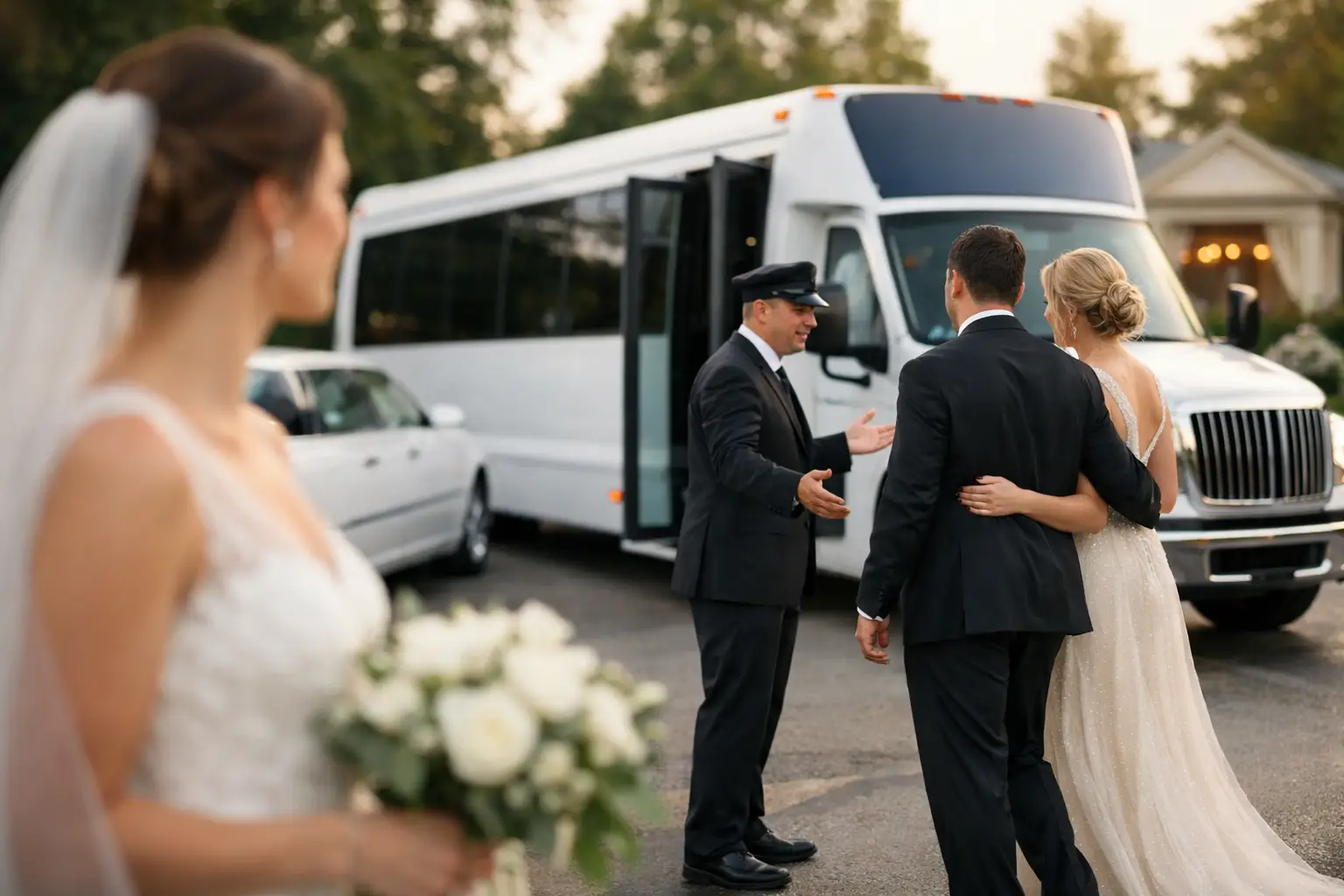
Wedding Shuttle Coordination for Refined Events
Wedding shuttle coordination brings every guest from ceremony to celebration with privacy, precise timing, and…
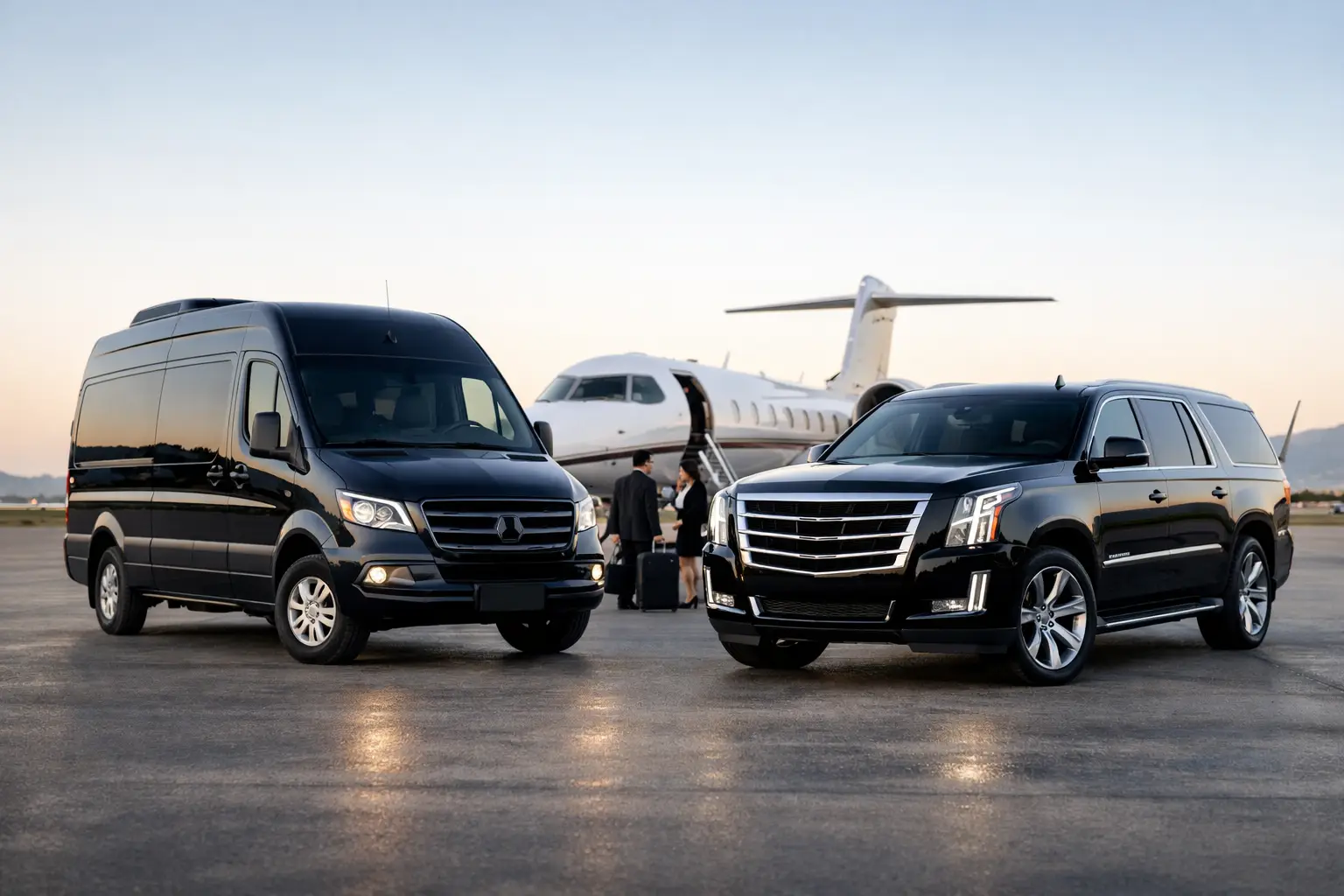
Sprinter Versus Escalade for Executive Travel
Compare Sprinter versus Escalade service for executive travel, airport transfers, and events, with the privacy,…