FBO Arrival Guide for Private Jet Passengers
November 15, 2026 · 6 min read · PV Black Car

Our FBO arrival guide explains what happens after touchdown, from ramp access and baggage to discreet chauffeur pickup and final destination with ease.
The aircraft door opens, the Arizona heat settles in, and the next ten minutes determine whether your arrival feels composed or needlessly exposed. A thoughtful FBO arrival guide is not about making private aviation more complicated. It is about preserving the advantages you selected it for: privacy, control of your time, and a direct transition from aircraft to destination.
At a fixed-base operator, the details are quieter than at a commercial terminal, but they still matter. Ramp procedures vary, access permissions are closely managed, and the person meeting your aircraft must know where to be, when to arrive, and how to adjust when the flight moves. For executives, families, and public-facing travelers, that planning turns touchdown into a private, polished handoff.
What an FBO Arrival Actually Looks Like
An FBO is the private aviation terminal and service facility that supports your aircraft on the ground. Depending on the airport, it may handle fueling, crew coordination, baggage assistance, catering, hangar services, passenger lounges, and ramp access. It is not simply a smaller airport terminal. It is the operational point where your flight crew, FBO staff, security protocols, and ground transportation team meet.
After landing, the aircraft is typically directed to its assigned ramp position. Passengers may deplane onto the ramp and walk a short distance to a waiting vehicle or into the FBO lounge. The exact sequence depends on the airport, the aircraft's parking location, weather, security conditions, and whether the vehicle has approved ramp access.
At Scottsdale Airport, a private arrival can be notably efficient, particularly when your ground transportation has been coordinated with the correct FBO and tail number in advance. At larger airports, the drive from the FBO to an on-property exit may take longer than a passenger expects. A professional chauffeur plans for this difference rather than treating every airport pickup like a curbside commercial-terminal collection.
Before Landing: The Details That Protect Your Time
The strongest arrivals are arranged well before the aircraft descends. Your chauffeur service should receive the aircraft tail number, FBO name, expected arrival time, passenger count, baggage considerations, and final destination. For travelers moving to a resort, private residence, office, golf club, or dinner reservation, the itinerary should also account for the next commitment rather than only the initial drive.
Flight monitoring is central to this preparation. Private flights can depart ahead of schedule, wait for clearance, divert around weather, or arrive early with favorable winds. A chauffeur relying solely on a stated pickup time may be late before the aircraft reaches the ramp. Monitoring the flight allows the transportation team to position the vehicle according to the aircraft's actual progress.
It is also wise to establish a single point of contact for changes. That may be an executive assistant, flight coordinator, lead passenger, or charter representative. Multiple people sending partial updates can create confusion at the precise moment when discretion is most valuable. One confirmed channel keeps the vehicle assignment, chauffeur instructions, and destination current without unnecessary calls to the traveler.
FBO Arrival Guide: Ramp Access and Vehicle Positioning
Ramp-side pickup is often assumed, but it should never be presumed. Each airport and FBO maintains its own access procedures. Some allow approved commercial vehicles onto the ramp after required clearance; others direct chauffeurs to a designated FBO entrance or passenger loading area. Security requirements, insurance documentation, staff escort policies, and the time of day can affect the arrangement.
For the passenger, the distinction is simple: ramp access can reduce walking and provide the most private transfer from aircraft to vehicle. However, an FBO entrance pickup can still be highly discreet when the chauffeur is staged correctly, communicates with FBO personnel, and meets the party promptly. The standard is not whether the vehicle is beside the aircraft at every airport. The standard is whether there is a confirmed, well-executed plan with no uncertainty at the door.
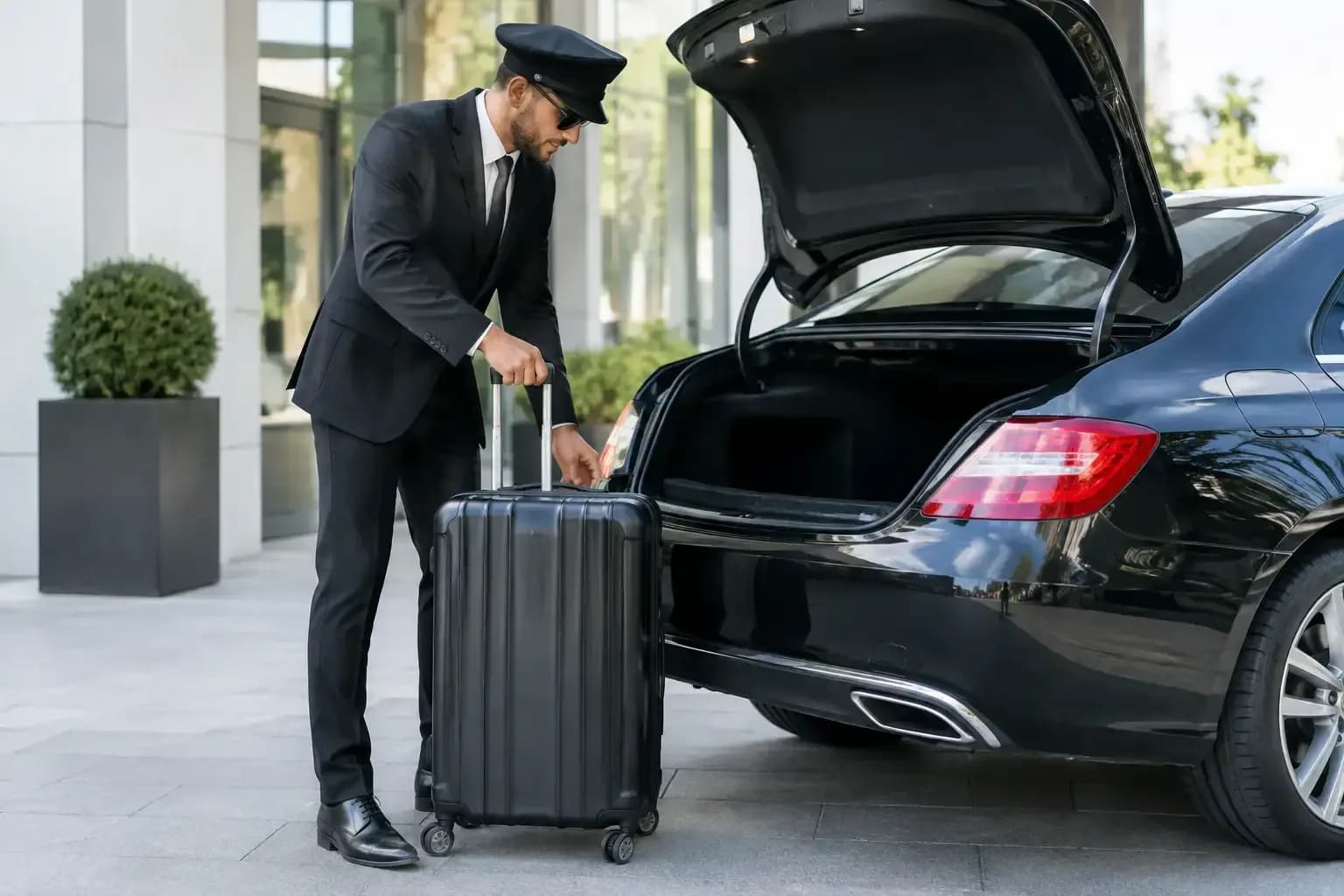
A qualified chauffeur should arrive early enough to complete required check-in procedures and remain nearby without obstructing FBO operations. The vehicle should be clean, climate controlled, and sized for the party and their luggage. An executive traveling alone may prefer the quiet, contained environment of a Cadillac Escalade. A family, executive team, or group carrying golf equipment may need the additional capacity of a Mercedes Sprinter van. Choosing the right vehicle is a practical decision, not merely a visual one.
Baggage, Pets, and Special Requests
Private aviation permits a more personal style of travel, which often means more variables on arrival. Soft-sided bags, garment bags, golf clubs, medical equipment, presentation materials, and pets all require consideration. The FBO may assist with unloading, but the chauffeur should know in advance if the vehicle needs extra cargo space or if a particular item requires careful handling.
For passengers traveling with pets, confirm the FBO's procedures and make sure the vehicle is prepared for a comfortable, secure ride. For those arriving after a long cross-country flight, small details such as chilled bottled water, dependable Wi-Fi, and a cool cabin are not decorative extras. They create a moment to reset before a board meeting, property visit, or private engagement.
If you have a security-sensitive item, a large quantity of luggage, or a time-critical document transfer, communicate that before the day of travel. Last-minute requests can sometimes be accommodated, but advance notice offers more choices and reduces unnecessary attention on the ramp.
Privacy Is Built Into the Process
Discretion at an FBO is not achieved by using a low-profile vehicle alone. It comes from disciplined conduct. A professional chauffeur does not announce passenger names in a lobby, discuss an itinerary with bystanders, seek photos, or turn a high-profile arrival into a spectacle. They identify the correct party quietly, assist as requested, and allow passengers to settle into the vehicle without interruption.
For clients with a public profile, the pickup plan may include specific instructions about vehicle placement, luggage handling, waiting locations, and the preferred route away from the airport. In some cases, the most direct route is not the best route. Traffic, event congestion, media presence, or a desire for a more private approach to a residence or venue may call for an alternative. Local knowledge is especially valuable in the Scottsdale and Paradise Valley corridor, where a short distance can still produce dramatically different travel times during major events and peak dining hours.
Confidentiality extends beyond the drive. Reservation details, flight information, destinations, and billing should be handled through secure, professional systems. The passenger should not need to repeat sensitive information to several people or wonder who can access their itinerary.
When Plans Change on the Ground
Private aviation is flexible, but flexibility can create rapid changes. A flight may arrive at a different FBO than expected, a passenger may continue onward before the rest of the party, or a meeting may move while the aircraft is still in the air. The right response is calm adjustment, not frantic coordination in front of the client.
A concierge-level ground team maintains enough awareness to respond to these shifts. If the aircraft changes its arrival time, the chauffeur adjusts. If baggage takes longer than expected, the vehicle remains ready. If the destination changes, the route and timing are recalculated without treating the traveler as a dispatcher.
That said, there are limits. Airport access regulations cannot be bypassed, and a last-minute vehicle change may depend on availability. Clear communication gives your transportation provider the best chance to protect the experience, even when the day does not follow the original schedule.
The First Drive Sets the Tone
The drive from an FBO is often the only quiet interval between travel and a demanding schedule. It can be a place to make a private call, review notes, decompress with family, or simply enjoy a few uninterrupted minutes. The cabin should support that purpose: immaculate, comfortable, and free from unnecessary conversation.
The best chauffeur anticipates without imposing. They confirm the destination when appropriate, manage luggage with care, select a route suited to current conditions, and understand when privacy means silence. This is the distinction between transportation and a properly managed arrival.
For discerning private flyers, the aircraft is only one part of the journey. The ground transfer should carry the same standard of precision from the ramp to the final door. With a well-coordinated plan and a discreet chauffeur waiting at the right place, arrival remains exactly what it should be: effortless, private, and entirely on your terms.