
A delayed pickup outside a resort, a phone call taken in the back seat of an unfamiliar vehicle, a driver who misses the private aviation terminal entrance – these are not minor inconveniences when the passenger is responsible for a company, a transaction, or a tightly held personal schedule. Executive mobility is the discipline of moving leaders with the same care applied to their calendar, communications, and security.
For discerning travelers, ground transportation is not a gap between important moments. It is part of the operating environment. The right vehicle, chauffeur, route, and arrival protocol create something increasingly rare: protected time with no unnecessary friction.
What Executive Mobility Actually Means
Executive mobility is often mistaken for a premium vehicle and a polite driver. Those elements matter, but they are only the visible portion of the experience. True executive transportation is a coordinated service designed around the passenger’s priorities: punctuality, privacy, flexibility, and composure.
A leader traveling from Phoenix Sky Harbor to a Paradise Valley residence may need a quiet cabin for a confidential call. A visiting executive moving between Scottsdale meetings may need to revise the itinerary with little notice. A private aviation passenger may need a chauffeur positioned precisely where the aircraft’s arrival process requires. In each case, the vehicle is the setting, but operational awareness is the service.
That distinction matters because travel plans rarely remain static. Flights arrive early, board meetings run long, dinner reservations shift, and security preferences vary by passenger. A thoughtful mobility plan has room for these realities without making the client manage them from the back seat.
Executive Mobility Protects the Most Valuable Asset: Time
Time is not simply saved by traveling faster. In the Valley, traffic patterns, event congestion, airport construction, and seasonal demand can turn a short distance into an unpredictable transfer. The value of a professional chauffeur lies in anticipating those variables before they become the passenger’s problem.
Local routing knowledge is especially valuable when timing matters. A chauffeur who understands access points at major resorts, corporate campuses, golf clubs, and private terminals can reduce the small delays that erode an otherwise well-planned day. The goal is not a dramatic shortcut. It is a calm, accurate arrival.
There is also a meaningful difference between transit time and usable time. In a refined Cadillac Escalade or Mercedes Sprinter, a passenger can review materials, make calls, regroup after a flight, or simply sit without being required to make another decision. Wi-Fi, bottled water, a composed interior, and an experienced chauffeur may sound like details. For an executive managing a compressed schedule, they create the conditions to arrive prepared rather than merely present.
Privacy Is a Service Standard, Not an Added Feature
Public-facing professionals, family offices, athletes, entrepreneurs, and senior leaders each have different reasons to value discretion. Some are protecting sensitive business discussions. Others want to avoid unwanted attention. Many simply prefer the freedom of moving through a day without explaining themselves to strangers.
This is why executive mobility must extend beyond tinted windows. Discretion is reflected in chauffeur training, quiet communication, careful confirmation practices, secure digital billing, and an understanding that a passenger’s itinerary is private. It also means knowing when not to engage. A concierge-level chauffeur is attentive without being intrusive and prepared without performing for the client.
For corporate travel coordinators, confidentiality also affects the booking process. Passenger names, flight details, meeting locations, and billing information should be handled with the same professionalism expected of any trusted hospitality partner. A polished experience begins well before the vehicle reaches the curb.
The Case for a Consistent Chauffeur Standard
Ride-hailing can be useful for ordinary, low-stakes trips. It is built for availability and convenience, not for continuity of service. The trade-off is variability: vehicle condition, driver experience, arrival timing, and knowledge of the passenger’s preferences can change with every booking.
Executive travel calls for a different standard. The passenger should know what will arrive, who will be driving, and how the transfer will be managed. This predictability is particularly valuable for airport departures, investor meetings, medical appointments, formal events, and travel involving guests whose experience reflects on the host.
Consistency does not mean rigidity. A tailored service should accommodate a revised stop, a last-minute return flight, or a guest added to an itinerary when feasible. It means changes are handled by a team accustomed to solving logistical details quietly and professionally.
Choosing the Right Vehicle for the Assignment
Executive mobility is not one-size-fits-all. A single passenger arriving from a long flight may prefer the personal space and elevated ride of a luxury SUV. A leadership team traveling together may benefit from a Mercedes Sprinter with generous seating and room to confer without dividing the group across several vehicles.
Vehicle selection should account for more than passenger count. Consider luggage, golf equipment, security requirements, the formality of the occasion, and whether the trip includes meaningful work time. A vehicle that feels appropriate for an airport transfer may not be the best choice for transporting a board delegation or hosting out-of-town clients during a full day of appointments.
The same principle applies to hourly reservations. When the schedule includes multiple stops, the ability to keep belongings securely in the vehicle and return to a familiar, climate-controlled cabin changes the character of the day. Instead of repeatedly arranging transportation, the client retains a private base of operations.
Airport and Private Aviation Transfers Require Precision
Air travel creates more variables than most ground journeys. Commercial flight arrivals can shift quickly, baggage timing differs by passenger, and airport pickup rules can be frustrating for visitors. A chauffeur service that monitors flights can adjust to the actual arrival rather than relying only on the original itinerary.
Private aviation presents a separate set of expectations. The experience should feel continuous from aircraft to destination, with the chauffeur coordinated around the appropriate terminal procedures and prepared for changing departure or arrival times. Privacy and precision are central here. A passenger should not need to search for a vehicle, repeat directions, or wait curbside after a flight.
There are practical limits, of course. Severe weather, air traffic restrictions, and major event congestion can affect even the most carefully arranged transfer. The measure of a premium provider is not an unrealistic promise that conditions never change. It is clear communication, advance planning, and an informed response when they do.
How to Build an Executive Mobility Plan
The best arrangements begin with a few useful details shared at reservation time: flight information, number of travelers, luggage needs, preferred pickup instructions, key stops, and any timing that cannot move. For complex days, it helps to identify the principal passenger, an authorized coordinator, and the preferred method for communicating schedule changes.
It is equally worthwhile to state preferences plainly. Some clients want conversation; others want complete quiet. Some need a child seat, extra room for clubs, or a vehicle held during a dinner or event. A high-touch provider should be able to record these details and execute them without requiring the client to restate every preference on future reservations.
For organizations, centralized billing and digital confirmations add a layer of control. They make it easier for executive assistants, travel managers, and family office staff to verify arrangements while giving the passenger an experience free from administrative interruptions. That balance – detailed coordination behind the scenes and simplicity for the traveler – is the gold standard.
PV Black Car approaches each reservation as a private itinerary, not a generic trip. The chauffeur’s role is to be present before the client needs them, informed without being conspicuous, and focused on the details that protect the passenger’s time and peace of mind.
The next time a demanding day is taking shape, treat the ground transfer as part of the plan rather than an afterthought. A well-managed vehicle waiting at the right place can give the day its first moment of control – and often its most valuable one.



Executive Mobility Is a Business Advantage
Executive mobility gives leaders privacy, precision, and protected time between meetings, airports, resorts, and private…

How to Organize Client Pickups With Precision
Learn how to organize client pickups with precise timing, discreet communication, flight monitoring, and polished…
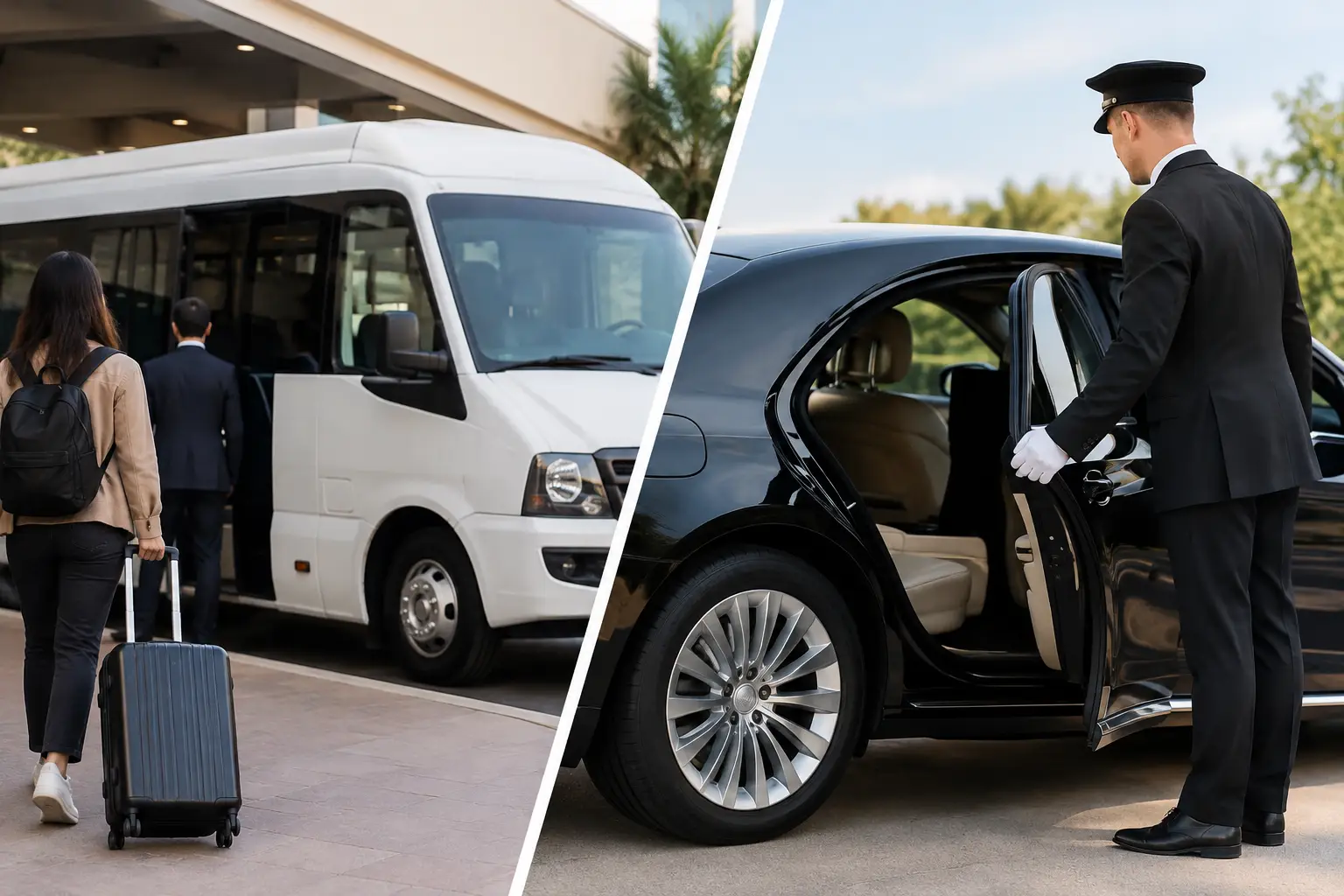
Hotel Shuttle Versus Chauffeur: Which Fits?
Hotel shuttle versus chauffeur: compare privacy, timing, comfort, and control for airport and resort travel…

How to Coordinate Resort Transfers Without Guesswork
Learn how to coordinate resort transfers with private timing, flight monitoring, luggage planning, and discreet…

Golf Transport Guide for Discerning Players
A golf transport guide for Scottsdale players covering club care, tee-time planning, vehicle space, and…

Multi Stop Transport for a Day That Runs on Time
Multi stop transport for executive schedules, private outings, and Valley events, with discreet chauffeurs, precise…

Corporate Retreat Transport That Keeps Plans on Time
Corporate retreat transport for executive teams: discreet chauffeurs, refined vehicles, and thoughtful logistics that keep…

Essential Features of VIP Transport That Matter
Learn which essential features of VIP transport protect privacy, preserve time, and deliver composed, reliable…

Chauffeur Service Versus Rental for Executive Travel
Compare chauffeur service versus rental for airport arrivals, executive schedules, events, and private travel across…

What a Private Car Service Review Should Reveal
A private car service review for travelers who expect punctual arrivals, genuine discretion, refined vehicles,…