A client’s first impression of an executive visit often happens before the meeting room, resort lobby, or private residence. It happens at the curb. Knowing how to organize client pickups means treating that arrival as a controlled hospitality experience: the vehicle is in place, the chauffeur is informed, the route is considered, and the client never has to wonder where to go next.
For executives, high-profile guests, and private aviation travelers, a pickup is not a minor logistical detail. It sets the tone for the entire engagement. A late vehicle, an unclear meeting point, or an unnecessary call from an unfamiliar driver can create friction before the day has begun. The strongest pickup plans are quiet, exact, and built around the client’s schedule rather than the transportation provider’s convenience.
Begin With a Complete Client Movement Brief
A reservation should capture more than an address and a time. The operational brief is where an ordinary car service becomes a concierge-level arrangement. Confirm the client’s full name, preferred form of address, mobile number, party size, luggage profile, and any relevant mobility or privacy requirements.
Then establish the purpose of the journey. An airport arrival for a board member heading directly to a presentation requires a different plan than a couple arriving for an evening event or a family transferring from a private terminal with golf equipment. Purpose informs vehicle selection, routing, timing, and the level of assistance expected on arrival.
The most useful briefs also identify the client’s next commitment. If a guest lands at Phoenix Sky Harbor and must be at a Paradise Valley residence or Scottsdale meeting within a narrow window, the chauffeur should understand the true deadline, not simply the requested pickup time. That allows for a more intelligent departure plan and gives the transportation team room to account for traffic, baggage timing, and terminal conditions.
Confirm the Pickup Location With More Detail Than an Address
Addresses can be deceptively incomplete. Large resorts may have multiple entrances. Corporate campuses often have visitor loops, executive entrances, and restricted loading areas. Airports introduce terminal, airline, baggage-claim, and curbside restrictions that can change during the day.
For airport service, confirm the flight number, arrival airport, airline, terminal when available, and whether the client prefers curbside collection or a meet-and-greet arrangement. Flight monitoring should be part of the plan, not an add-on the client must request. A delayed or early arrival is common; a transportation plan that does not adjust is not.
For private aviation, coordinate with the FBO or handling team in advance. The preferred vehicle position, ramp access procedures, passenger release timing, and luggage handling protocol should be understood before the aircraft is on the ground. This level of preparation protects privacy and avoids a visible scramble at the terminal.
At hotels, clubs, residences, and event venues, name the exact entrance and identify a practical vehicle staging point. The goal is not merely to arrive at the property. It is to arrive where the client can enter the vehicle immediately, comfortably, and without public confusion.
Choose a Vehicle That Matches the Actual Journey
Vehicle choice is part of pickup organization, not a cosmetic preference. An executive traveling alone with a briefcase may value a quiet Cadillac Escalade with space to make calls in private. A leadership team, family, or group traveling with substantial luggage may be better served by a Mercedes Sprinter van with generous capacity and a refined cabin.
Consider the number of passengers, luggage volume, anticipated traffic time, attire, and whether the client will work en route. A vehicle that technically fits everyone can still feel inadequate after a long flight or before an important engagement. Ample space, Wi-Fi, bottled water, climate control, and properly maintained interiors support a composed arrival.
There is also a trade-off between a smaller vehicle’s discretion and a larger vehicle’s group comfort. The right answer depends on the client’s priorities. For public-facing guests, privacy and understated arrival may lead the decision. For a corporate delegation, keeping the group together may be more valuable than separate vehicles.
Build Time Buffers Without Making the Client Wait
Punctuality is not simply being on time. It is being prepared early enough that variables do not become the client’s problem. Chauffeurs should arrive in the area with sufficient time to assess traffic, venue access, and curb availability, while communicating arrival only when it is useful to the guest.
For scheduled pickups from residences or offices, a discreet confirmation shortly before departure can be appropriate. It should be concise and recognizable, with the chauffeur’s name, vehicle description, and a direct point of contact if needed. Repeated calls, vague messages, or last-minute changes create the opposite of reassurance.
Airport arrivals require a more flexible buffer. Flight status is only one factor. Deplaning, gate changes, checked baggage, customs, and terminal congestion all affect the handoff. Monitor the flight, but do not assume a touchdown time is a pickup-ready time. The chauffeur should be positioned to adapt while the client receives clear instructions only when action is required.
Give the Chauffeur Context, Not Just Directions
A highly trained chauffeur can anticipate needs only when given relevant context. Share the itinerary, confirmed pickup protocol, preferred route where applicable, vehicle assignment, guest names, and any confidentiality expectations. If a client needs quiet time after a flight, that should be known. If they are traveling to a time-sensitive dinner or a confidential meeting, that should shape the service without requiring conversation in the vehicle.
Professional discretion matters most in the details. Chauffeurs should not announce client names publicly, discuss destinations with third parties, or seek unnecessary attention. For clients who value privacy, the ideal interaction is warm but measured: assistance is readily available, and personal space is respected.
Local knowledge also adds value when conditions change. A chauffeur familiar with the Scottsdale, Paradise Valley, and Phoenix corridor can make better decisions when road work, event traffic, weather, or venue congestion affects the original route. Technology can show a delay. Experience helps determine the best response.
Keep Communication Clear, Limited, and Useful
The client should not have to manage the pickup. A strong communication sequence normally includes booking confirmation, a pre-arrival update when appropriate, and concise instructions at the moment they are needed. The exact cadence depends on the journey.
For an airport pickup, the client may receive a confirmation before travel and a simple message after landing that identifies the chauffeur and meeting location. For a residence departure, a notification that the vehicle has arrived is often sufficient. For an executive assistant arranging service on behalf of a principal, provide the assistant with relevant status updates while preserving the traveler’s privacy.
Use one point of contact for real-time changes. Multiple people sending conflicting messages can quickly undermine an otherwise polished plan. Digital confirmations and secure billing also reduce administrative noise, allowing the traveler and their team to focus on the reason for the trip.
Plan for Changes Before They Happen
No pickup schedule is immune to changes. Flights divert, meetings run long, luggage is delayed, and event exits become congested. The difference between a disrupted experience and a well-managed one is contingency planning.
Before the pickup, define the response to common changes. If a flight is delayed, will the chauffeur adjust automatically through flight monitoring? If a meeting extends, how will the client or assistant request additional time? If an event has multiple exits, where should the chauffeur reposition? These decisions do not need to be complicated, but they should be made before pressure is high.
For high-value itineraries, keep the schedule intentionally flexible. An hourly chauffeur booking can be preferable when the day includes several unknowns, such as private appointments, site visits, shopping, dining, or an event with an uncertain conclusion. Point-to-point service works well when the schedule is fixed. The best format depends on how much control the client needs throughout the day.
Treat the Departure as Carefully as the Arrival
An organized pickup does not end when the client enters the vehicle. Confirm the destination discreetly, ensure luggage is accounted for, and begin the journey with the same calm precision that defined the handoff. If the client needs to make a call, adjust the cabin environment accordingly. If they prefer conversation or local recommendations, the chauffeur can respond with informed restraint.
At PV Black Car, this disciplined approach reflects the gold standard of private ground transportation: every detail is arranged in advance, yet the experience feels effortless to the passenger. That is the point. A client pickup should never feel like a coordination exercise they have been asked to supervise.
When the vehicle arrives exactly where it should, the chauffeur knows precisely what is needed, and the guest moves forward without interruption, transportation becomes more than a ride. It becomes a quiet expression of respect for the client’s time, privacy, and expectations.




Executive Mobility Is a Business Advantage
Executive mobility gives leaders privacy, precision, and protected time between meetings, airports, resorts, and private…

How to Organize Client Pickups With Precision
Learn how to organize client pickups with precise timing, discreet communication, flight monitoring, and polished…
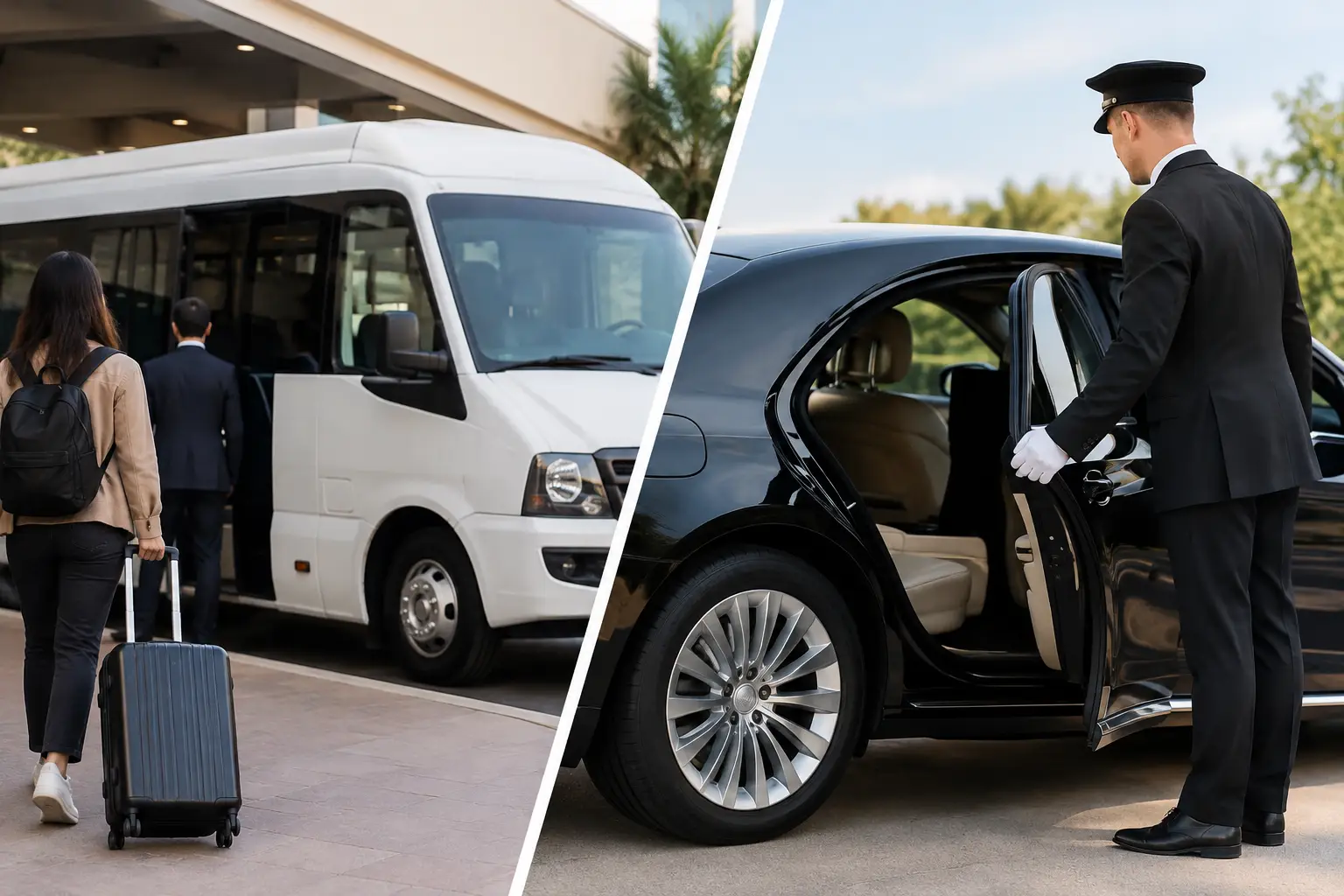
Hotel Shuttle Versus Chauffeur: Which Fits?
Hotel shuttle versus chauffeur: compare privacy, timing, comfort, and control for airport and resort travel…

How to Coordinate Resort Transfers Without Guesswork
Learn how to coordinate resort transfers with private timing, flight monitoring, luggage planning, and discreet…

Golf Transport Guide for Discerning Players
A golf transport guide for Scottsdale players covering club care, tee-time planning, vehicle space, and…

Multi Stop Transport for a Day That Runs on Time
Multi stop transport for executive schedules, private outings, and Valley events, with discreet chauffeurs, precise…

Corporate Retreat Transport That Keeps Plans on Time
Corporate retreat transport for executive teams: discreet chauffeurs, refined vehicles, and thoughtful logistics that keep…

Essential Features of VIP Transport That Matter
Learn which essential features of VIP transport protect privacy, preserve time, and deliver composed, reliable…

Chauffeur Service Versus Rental for Executive Travel
Compare chauffeur service versus rental for airport arrivals, executive schedules, events, and private travel across…

What a Private Car Service Review Should Reveal
A private car service review for travelers who expect punctual arrivals, genuine discretion, refined vehicles,…