A private vehicle should feel composed before the passenger ever steps inside. That expectation is the foundation of chauffeur etiquette: a disciplined standard of timing, discretion, presentation, and judgment that turns ground transportation into a considered part of the day. For an executive heading to a board meeting, a family arriving from a private flight, or a guest traveling to an evening engagement, the difference is felt in the details that never require a request.
Chauffeur Etiquette Begins Before Arrival
Exceptional service is rarely improvised. A professional chauffeur prepares well before the scheduled pickup time by reviewing the itinerary, confirming the address and preferred route, accounting for traffic patterns, and ensuring the vehicle is immaculate inside and out. For airport and private aviation transfers, this preparation also includes flight monitoring, so a change in arrival time does not create unnecessary calls or uncertainty for the traveler.
Punctuality is more than arriving at the curb on time. It means arriving early enough to be ready when the client is ready. The chauffeur should know where to stage, which entrance offers the most privacy, and how to make contact without creating a disturbance. At a resort, corporate office, residence, or FBO, the correct approach may differ. Good judgment matters as much as a precise clock.
The vehicle itself communicates the standard. Climate should be comfortable, bottled water refreshed, Wi-Fi checked where available, and cabin surfaces free of clutter. A Cadillac Escalade or Mercedes Sprinter should present as a private retreat, not merely a mode of transportation. The passenger should enter a quiet, orderly environment designed around their comfort and control.
The Greeting: Warm, Brief, and Properly Timed
A chauffeur’s greeting should be courteous without becoming performative. A simple confirmation of the passenger’s name, offered in a calm tone, is generally sufficient. The passenger may want conversation, or may be stepping out of a demanding meeting, a long flight, or a private engagement. The chauffeur follows the client’s lead.
Opening and closing doors, assisting with luggage, and offering an umbrella during poor weather are not theatrical gestures. They are practical expressions of care. The same principle applies to luggage handling. Bags should be treated carefully, loaded securely, and kept organized for efficient retrieval at the next stop. For a traveler carrying sensitive materials, high-value personal items, or golf equipment, attentive handling is especially meaningful.
There is also a line between helpfulness and overreach. A chauffeur should not presume to handle a personal item without permission, enter a residence or private office unless invited, or impose conversation to fill a quiet cabin. Refined service is attentive, never intrusive.
Privacy Is Not a Feature. It Is a Discipline.
For many discerning travelers, confidentiality is the primary reason to reserve private transportation. Chauffeur etiquette requires complete discretion about passengers, destinations, conversations, schedules, and associations. A chauffeur does not discuss who they transported, where they traveled, what they wore, or whom they met. That remains true after the ride has ended.
The vehicle cabin is often an extension of the office, family home, or private suite. Calls may involve financial decisions, legal matters, personnel conversations, or personal concerns. A trained chauffeur understands that silence is part of the service. They do not listen in, comment on what they overhear, or ask questions prompted by a passenger’s conversation.
Discretion extends beyond words. It includes choosing an appropriate pickup point, avoiding unnecessary attention, keeping windows and vehicle presentation polished, and managing arrivals with restraint. For public-facing clients, this thoughtful approach can make the difference between an exposed moment and a controlled transition.
The Art of Anticipation Without Assumption
The best chauffeurs think several steps ahead. They recognize when a passenger may need extra time at a stop, when traffic conditions warrant an earlier departure, or when a different route will provide a quieter, more efficient journey. Local knowledge is particularly valuable throughout Scottsdale, Paradise Valley, Phoenix, and the surrounding Valley, where event traffic, resort access, airport congestion, and seasonal patterns can quickly alter a plan.
Still, anticipation must be balanced with respect for the client’s preferences. A chauffeur may recommend an alternate route or suggest a suitable departure time, but the traveler remains in command. Some guests value the fastest route. Others prefer a calmer drive, a particular road, or time to complete a call before arrival. The professional response is to understand the preference, not to insist on a single definition of efficiency.
This is where reservation-based service has a clear advantage over a transactional ride. A chauffeur working from a detailed itinerary can adapt intelligently when a meeting runs late, a dinner moves venues, or a flight arrives ahead of schedule. The experience remains controlled because the service team and chauffeur are prepared to make thoughtful adjustments.
Conversation, Music, and Cabin Preferences
There is no universal rule that a chauffeur should be silent, nor is there a rule that they should be conversational. The appropriate standard is responsiveness. If a passenger opens a conversation, the chauffeur can engage politely, with a professional understanding of boundaries. Questions should remain appropriate and never probe into personal, business, or travel details.
Music follows the same principle. A quiet cabin is often preferred, particularly for executives and travelers arriving from the airport. If music is requested, volume and selection should suit the passenger, not the chauffeur. Navigation prompts, phone alerts, and radio chatter should never interrupt the cabin atmosphere.
Temperature, lighting, charging access, and water are similarly small considerations with an outsized effect. Offering options once is helpful. Repeatedly asking whether everything is satisfactory can become distracting. The gold standard is a cabin that feels naturally prepared, with assistance available the moment it is wanted.
Professional Boundaries at Every Stop
Hourly reservations and multi-stop itineraries call for particular discipline. A chauffeur should confirm the next instructions, remain accessible, and position the vehicle for a smooth departure. They should not disappear without clarity, block an entrance, or create pressure around timing. When a passenger says, “I’ll be a few minutes,” that may mean five minutes or fifty. The chauffeur’s role is to remain poised and ready while the operations team manages any schedule changes appropriately.
Safety is equally central to chauffeur etiquette. The chauffeur should drive with confidence but without abrupt acceleration, harsh braking, or unnecessary risk. A composed ride allows passengers to work, rest, make calls, or simply arrive in the right frame of mind. Professional driving is not about proving speed. It is about delivering the passenger precisely where they need to be, comfortably and without incident.
At the destination, the final moments deserve the same care as the first. The chauffeur should select a practical, discreet drop-off point, assist with doors and luggage, and ensure that no belongings have been left behind. A quiet confirmation of the next scheduled pickup, when applicable, provides reassurance without turning the departure into a production.
What Passengers Can Expect From PV Black Car
At PV Black Car, chauffeur etiquette is built into the operating standard, not treated as an optional courtesy. Every reservation is approached as a tailored private experience, supported by trained chauffeurs, refined vehicles, itinerary awareness, digital confirmations, and a firm commitment to confidentiality. Whether the journey begins at Phoenix Sky Harbor, Scottsdale Airport, a private aviation terminal, or a residence, the objective is the same: calm, exacting service that protects the passenger’s time and privacy.
The most memorable chauffeur service rarely calls attention to itself. It simply removes friction from a demanding day, leaving the traveler with more space to focus on what brought them there.



Executive Mobility Is a Business Advantage
Executive mobility gives leaders privacy, precision, and protected time between meetings, airports, resorts, and private…

How to Organize Client Pickups With Precision
Learn how to organize client pickups with precise timing, discreet communication, flight monitoring, and polished…
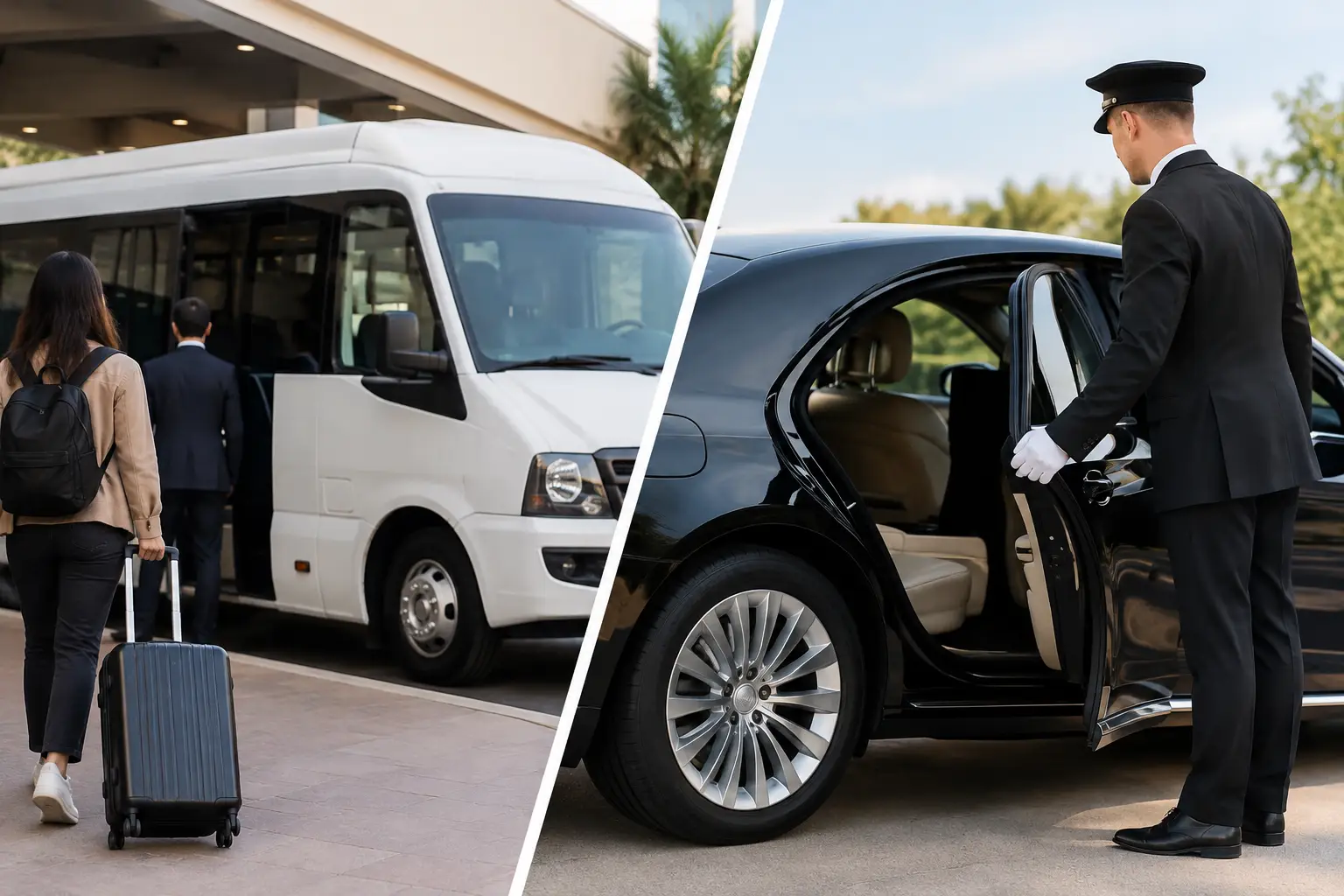
Hotel Shuttle Versus Chauffeur: Which Fits?
Hotel shuttle versus chauffeur: compare privacy, timing, comfort, and control for airport and resort travel…

How to Coordinate Resort Transfers Without Guesswork
Learn how to coordinate resort transfers with private timing, flight monitoring, luggage planning, and discreet…

Golf Transport Guide for Discerning Players
A golf transport guide for Scottsdale players covering club care, tee-time planning, vehicle space, and…

Multi Stop Transport for a Day That Runs on Time
Multi stop transport for executive schedules, private outings, and Valley events, with discreet chauffeurs, precise…

Corporate Retreat Transport That Keeps Plans on Time
Corporate retreat transport for executive teams: discreet chauffeurs, refined vehicles, and thoughtful logistics that keep…

Essential Features of VIP Transport That Matter
Learn which essential features of VIP transport protect privacy, preserve time, and deliver composed, reliable…

Chauffeur Service Versus Rental for Executive Travel
Compare chauffeur service versus rental for airport arrivals, executive schedules, events, and private travel across…

What a Private Car Service Review Should Reveal
A private car service review for travelers who expect punctual arrivals, genuine discretion, refined vehicles,…